Tell us about the job
Takes about a minute. No obligation.
A contractor quoting a water heater installation in Lincoln County is not making a weather-first decision. 48 severe weather events were recorded in Lincoln County, Georgia between 2015 and 2024. At that rate, severe weather is an occasional event rather than a standing condition, which means the variables that actually shape an install here are sediment load, the age of the existing plumbing, and whether the unit is sized for how the house actually draws hot water. A replacement that ignores those details and prices by the catalog alone will miss what the job requires.
The panel question comes before the equipment question. Half the homes in Lincoln County, Georgia were built in 1984 or earlier (2020-2024 ACS 5-year). Electrical service in houses that old was sized for what was standard at the time of construction, and water heating technology has changed enough since then that what a panel was built to carry and what a new unit draws do not always match. A contractor quoting a water heater here pulls the panel first, reads the breaker, and lets that determine the path forward.
What a Water Heater Installation Covers
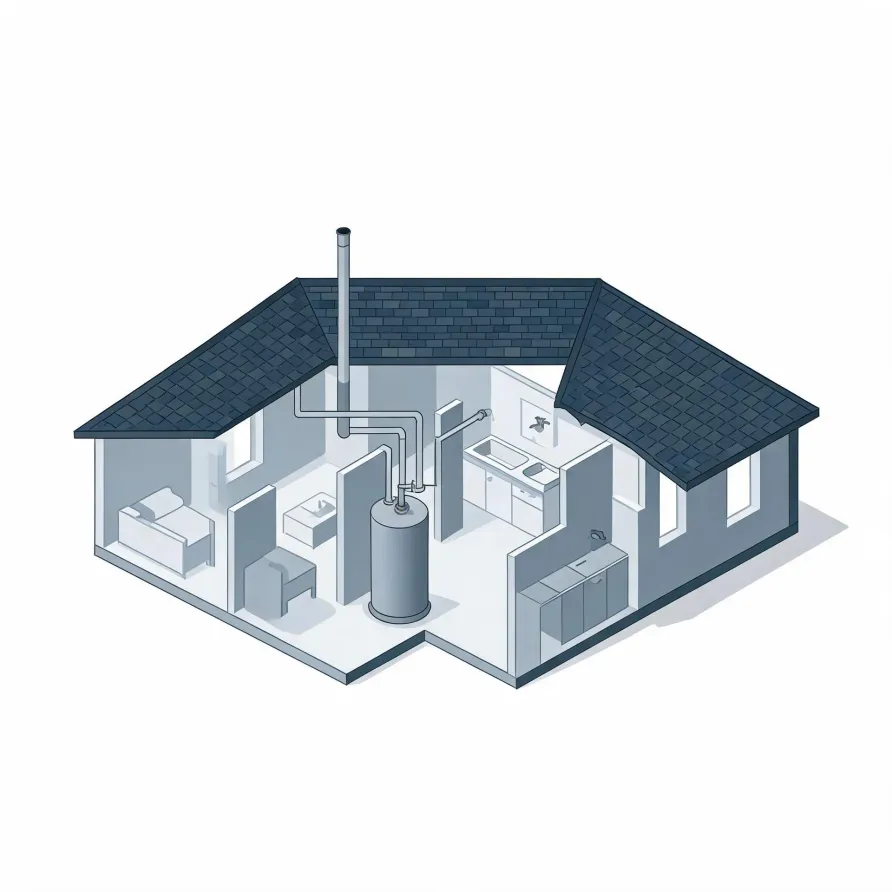
The tank or tankless unit is the centerpiece of the system. A storage tank sits in a utility room, basement, or garage and holds a ready supply of hot water. A tankless unit mounts to a wall in the same spaces and heats water on demand as it passes through.
Connecting the unit are cold-water supply lines feeding into it and hot-water lines running out to the rest of the house. A pressure relief valve mounts directly on the unit as a safety device, and the flue or venting pipe exits through a wall or the roof to carry exhaust gases outside.
The drawing shows a typical layout, and a licensed contractor determines what applies to your specific home.
Get matched in Lincoln CountyLincoln County, Georgia, by the numbers
48 severe weather events were recorded in Lincoln County, Georgia between 2015 and 2024.
NOAA National Centers for Environmental Information, Storm Events Database, bulk CSV export, events 2015-01-01 through 2024-12-31.Half the homes in Lincoln County, Georgia were built in 1984 or earlier (2020-2024 ACS 5-year).
U.S. Census Bureau, 2020-2024 American Community Survey 5-Year EstimatesLincoln County, Georgia holds 4,529 housing units (2020-2024 ACS 5-year).
U.S. Census Bureau, 2020-2024 American Community Survey 5-Year EstimatesOwners occupy 76.6% of the occupied homes in Lincoln County, Georgia (2020-2024 ACS 5-year).
U.S. Census Bureau, 2020-2024 American Community Survey 5-Year EstimatesSevere Weather Events in Lincoln County
Water heaters work harder when weather swings push household demand up and put stress on equipment already running near its limits. How often that happens in Lincoln County shapes what a properly sized, properly installed unit needs to handle.
48 severe weather events, 2015–2024. Source: NOAA National Centers for Environmental Information, Storm Events Database.