Tell us about the job
Takes about a minute. No obligation.
A contractor quoting a water heater install in Brooks County starts from what the local environment actually asks of the equipment. 100 severe weather events were recorded in Brooks County, Georgia between 2015 and 2024. That puts this area in the middle of the national range, where severe weather shows up often enough to matter but not so relentlessly that it explains every failure on its own. Sediment buildup, anode rod condition, and whether the original unit was properly sized for the household load are what a contractor checks first. The weather is a factor. It is rarely the whole story.
Ductwork and electrical service in a house get built once, for the equipment the builder specified that year. What runs in the house decades later is something different, and the gap between the two is where a water heater installation gets complicated or stays simple. Half the homes in Brooks County, Georgia were built in 1987 or earlier (2020-2024 ACS 5-year). That means the typical house a contractor walks into here has infrastructure that was never designed around current equipment, and the first question on any installation job is whether that infrastructure can carry it without being touched.
What a Water Heater Installation Covers
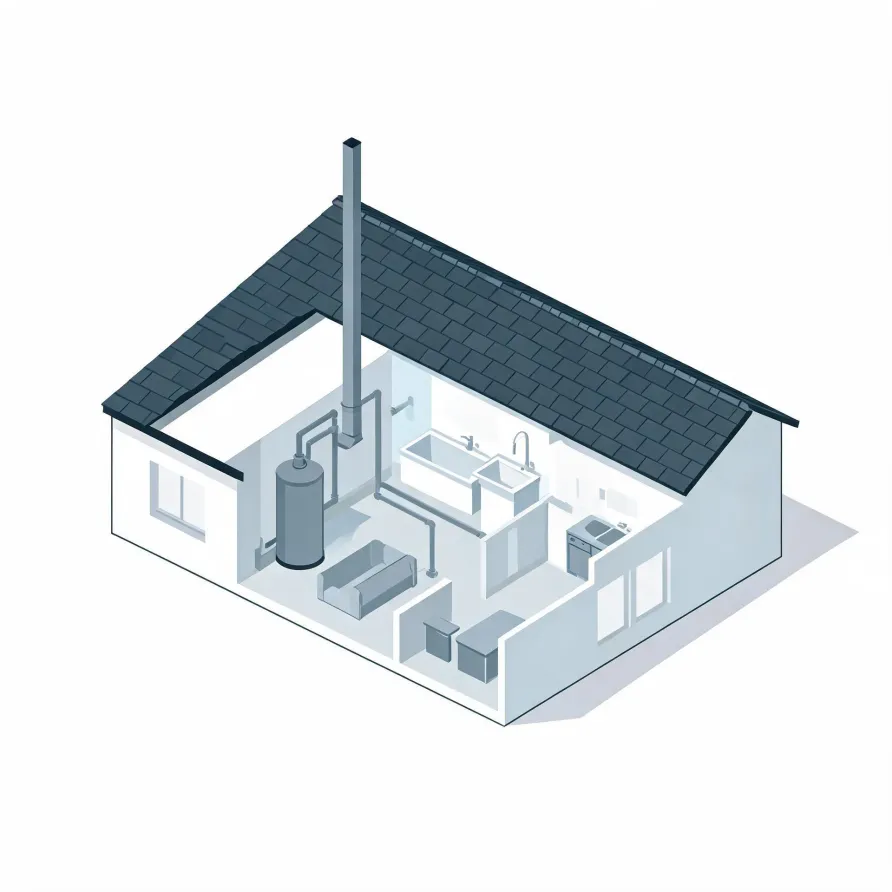
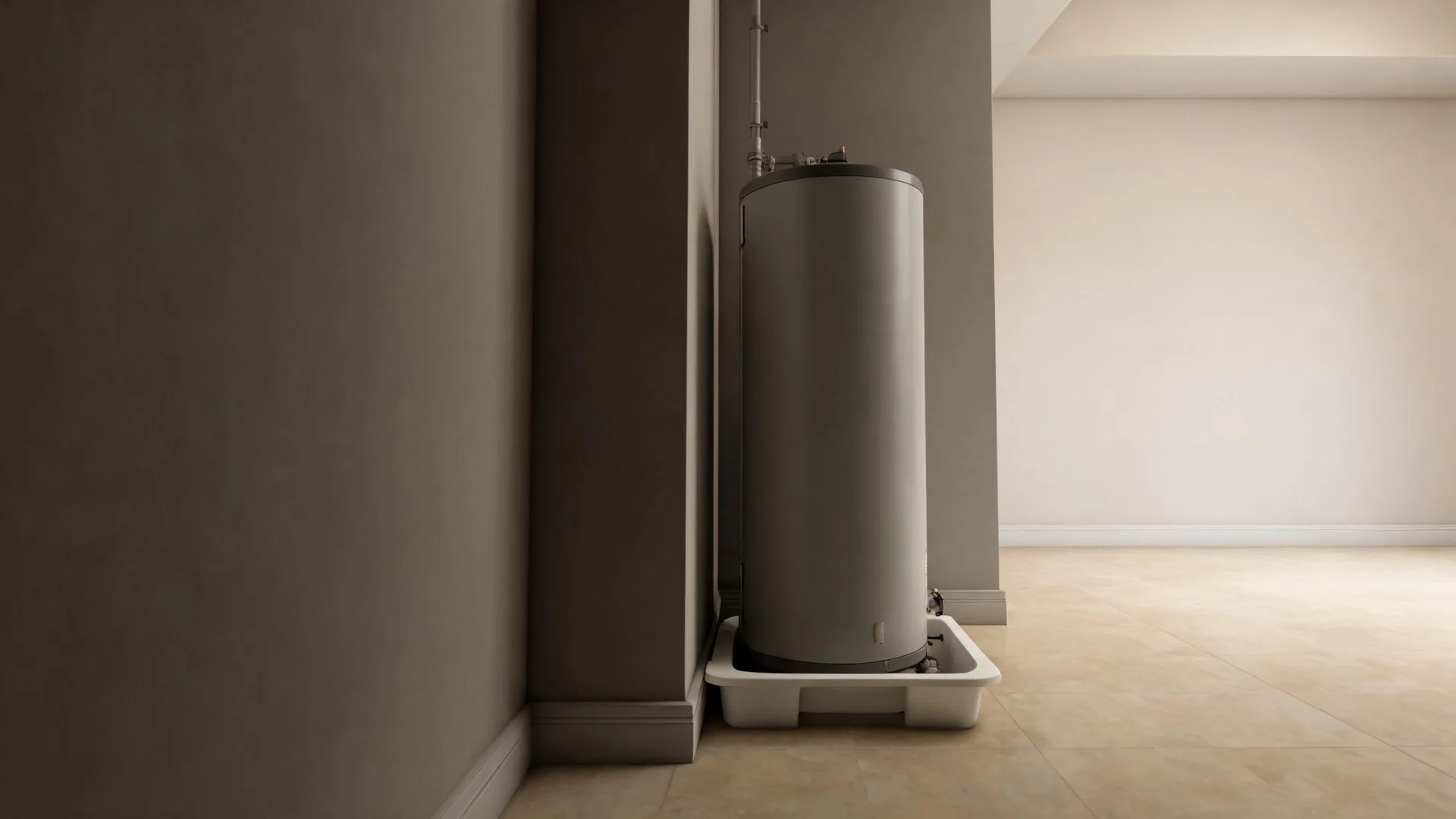
The tank or tankless unit is the heart of the system. A storage tank sits upright in a utility closet, basement, or garage and holds a ready supply of hot water. A tankless unit mounts to a wall in the same general areas and heats water as it passes through, with no standing reservoir.
The cold-water inlet line feeds into the unit from the home's supply, and the hot-water outlet line carries heated water out to every fixture. A pressure relief valve mounts directly on the tank as a safety device, and a dedicated gas line or electrical circuit runs to the unit to power the heat source.
The drawing shows a typical layout, and a licensed contractor determines what applies to your specific home and setup.
Get matched in Brooks CountyBrooks County, by the numbers
100 severe weather events were recorded in Brooks County, Georgia between 2015 and 2024.
NOAA National Centers for Environmental Information, Storm Events Database, bulk CSV export, events 2015-01-01 through 2024-12-31.Half the homes in Brooks County, Georgia were built in 1987 or earlier (2020-2024 ACS 5-year).
U.S. Census Bureau, 2020-2024 American Community Survey 5-Year EstimatesBrooks County, Georgia holds 7,357 housing units (2020-2024 ACS 5-year).
U.S. Census Bureau, 2020-2024 American Community Survey 5-Year EstimatesOwners occupy 71.7% of the occupied homes in Brooks County, Georgia (2020-2024 ACS 5-year).
U.S. Census Bureau, 2020-2024 American Community Survey 5-Year EstimatesSevere Weather Events in Brooks County
Extreme weather puts real stress on water heating equipment, shortening service life and driving up demand at the worst moments. How hard that pressure lands depends on local conditions, which is why the record for Brooks County sits here alongside the installation details.
100 severe weather events, 2015–2024. Source: NOAA National Centers for Environmental Information, Storm Events Database.